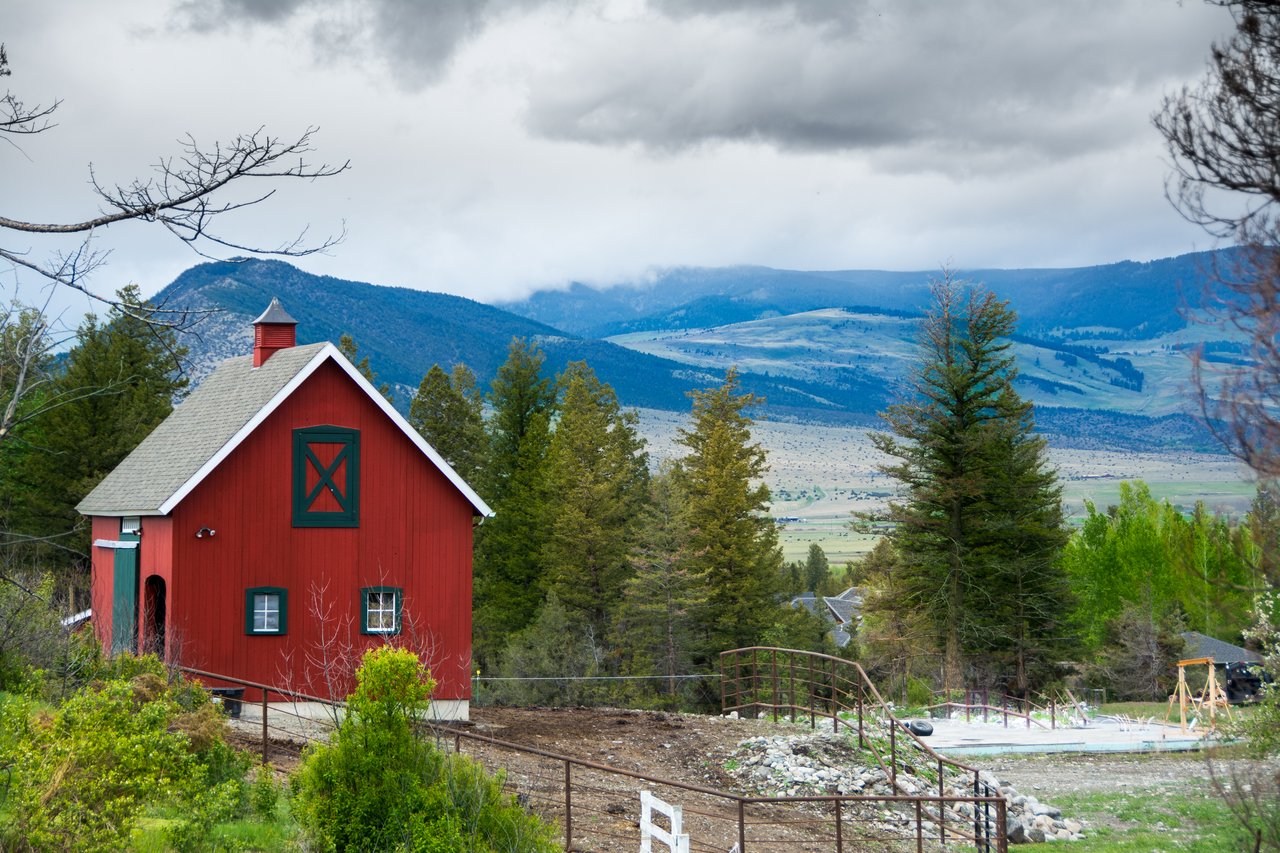
At the corner of Railroad Avenue and McGowan Street, in Dorothy V. Johnson Park, stands a marker titled Wild Horse Plains. It gives the valley's elevation as 2,450 feet and calls it "a circular valley." It traces the town's name in one sentence: the name "was shortened to Horse Plains and finally to Plains."
The two older names are still on things around town. The Horse Plains VFW Post is on West Lynch Street. A log school with the words Wild Horse Plains on its plaque sits beside Highway 200, and a 2016 account tied it to the Wild Horse Plains Women's Club. Plains changed the name on its post office and kept the old names on the things it built and looks after.
Here is where each name shows up, in an order you can walk or drive on a cold afternoon.
Three names, and who wintered the horses
The accounts of how the town got its name don't line up exactly, either on the order of the names or on who wintered horses here first.
The Montana History Portal, drawing on the Montana Historical Society Library and Archives, says the name went from Wild Horse Plains to Horse Plains to Plains. It dates the town to 1883 as a Northern Pacific Railroad station. It also says "British and American trappers used the area as a wintering site for horses as early as 1800."
The Town of Plains history page starts earlier and with different people. It says local American Indian tribes "recognized the value of the grasses in the Clark Fork River valley for wintering their horses." The town's account says the place was first known as Horse Plains and commonly called Wild Horse Plains, and that the name became simply Plains when the Postal Service set up here in 1905, and that the town was officially founded in 1907. The Sanders County Ledger also gives 1907 as the year Plains incorporated.
The marker at Railroad and McGowan agrees with the town. It says Native American tribes came through in the early 1800s and used the valley "for wintering their ponies, harvesting salmon, and holding great councils." According to the marker, mountain men and trappers followed. White settlers arrived in the late 1860s, and the Northern Pacific came between 1881 and 1883.
A 2016 piece on Montana's Historic Landscapes adds one more detail. It reports that local historians consider "Horse Plains" the more fitting name, "since the Salish Indians once wintered their horses here." The same writer adds that "Wild Horse Plains" is "the one that has stuck here in the 21st century."
So the town carries two older names. Horse Plains is the one local historians point to. Wild Horse Plains is the one that stuck. You can find both on buildings around town.
Stop one: the marker at Railroad and McGowan
The marker is in Dorothy V. Johnson Park, at Railroad Avenue and McGowan Street. Its listing gives the postal address as 310 Railroad Avenue.
Most people stop for the name. The marker goes back much further than that. It says that between 70,000 and 130,000 years ago, glaciers dammed the Clark Fork and backed up the water into Glacial Lake Missoula. When the dam broke, it says, "the Clark Fork River carried more water than the combined flow of all the streams of the world." In the marker's telling, that flood shaped the round valley that later wintered the horses and gave the town its names. If you have driven past the sign for years without reading it, it's worth a stop.
Stop two: the stone jail across from McGowan's
Stay on McGowan Street for the oldest thing in town still on its original spot. The old Plains jail sits directly across the street from McGowan's Grocery, per the Valley Press/Mineral Independent's 2022 report. It went up in 1904 and is still on the site where it was built.
Here is how the Valley Press described it: "approximately the size of an average house bedroom" with a single iron-bar cage inside. According to that report, the Plains jail was one of two built in 1904, and the other was a similar jail for Thompson Falls. Sanders County commissioners paid about $1,700 for the pair. The Town of Plains owns the building now. The Valley Press also passed along a story that goes with the building. A drunk prisoner once claimed he had shot the governor of Montana, and the claim was later debunked and blamed on the alcohol.
The walls are river rock. In the spring of 2022, the paper reported, local resident Tony Ferlan spent about a month digging out the century-old grout and replacing it with period-correct grout, working around days that were too cold for the material to set. Plains Mayor Dan Rowan told the Valley Press the town was "basically re-grouting and shoring up the structure before it falls over."
The same article says people have floated moving the jail to a more visible spot on Highway 200 to draw visitors. Ferlan told the paper a move "would be extremely expensive and impractical." So it stays on McGowan Street. The Valley Press reported that several people a day look in through the barred windows, during peak tourist months and the rest of the year too.
Stop three: the log school and the arch on Highway 200
The longest name is on the oldest building. A small park along Highway 200 holds two pieces of the town's school history. One is the log Wild Horse Plains school, which was moved to the park and restored for the American Bicentennial. The other is the cornerstone arch saved from Plains' high school, a building from the first decade of the 1900s that was later lost.
According to the historical marker database, the log school was built in 1878. Its plaque reads "In Memory of Wild Horse Plains Pioneers 1878 - 1976." The first date is when the school was built. The second is the Bicentennial restoration. The school is about five years older than the 1883 railroad station that the Montana History Portal treats as the town's start. In other words, the schoolhouse is older than the town under its current name.
Montana's Historic Landscapes reported in 2016 that the Wild Horse Plains Women's Club met in the old school and looked after the building and its landscaping. That club's name is one of the clearest places where the name Wild Horse Plains survives. The town is called Plains, and the club kept the full name.
Stop four: Horse Plains, on West Lynch Street
The middle name is on a sign too. The Horse Plains VFW Post 3596 is at 201 W Lynch St. Its auxiliary has been advertising bazaars in the local paper through 2025 and 2026. When the 2016 Montana's Historic Landscapes writer came back to Plains after 30 years, the VFW hall and the bowling alley were on his list of institutions still going, along with the local Grange.
If you came to Halloween at the VFW Hall this fall, from our October in Plains roundup, you were inside one of the places that still uses the Horse Plains name.
Stop five: the elevator on South Central
The last stop marks the railroad era, when the name got shorter. The marker says the town grew "in size and importance" once the Northern Pacific came through. The tallest leftover of that farm-and-rail economy is the grain elevator. In 2016, Montana's Historic Landscapes described it as converted into the Grainry Gallery and called it "an imaginative local adaptive reuse." Directory listings put the Grainry Gallery at 602 S Central Ave. It's a good last stop, and it brings you back near Railroad Avenue, where the walk began.
If you want more after the walk
The nearest history museum is down the highway in Paradise. The Paradise Center is at 2 School House Hill Road in a repurposed historic school. Its exhibits cover the old school, Glacial Lake Missoula, Paradise and railroad history. Its fall 2026 notice says the visitor center is closed for the season and tours are available by appointment, so call ahead for a Thanksgiving-week visit.
If guests are in town over the holiday, lunch timing in Plains has its own pattern, which we covered in why the best food in Plains closes before dinner, so plan the walk around it.
Every stop on this walk is also part of what people buy into in Plains: an 1878 school on the highway, a 1904 jail across from the grocery, and a valley named for horses before it was named for a railroad stop. If you'd like to talk about homes in town or acreage nearby, Deborah Warren is based right here in Plains and is glad to help. Contact Deb for a local market consult, and see more on the Plains community page.