Thinking about buying land near Plains and splitting it into smaller parcels? It can be a smart opportunity, but acreage alone does not tell you whether a property is actually subdividable. Around Plains, the real answer usually comes down to jurisdiction, access, utilities, floodplain concerns, and how Montana subdivision rules apply to that specific tract. This guide will help you understand what to look for before you buy, sell, or market land with subdivision potential. Let’s dive in.
Why subdividable land near Plains gets attention
Land around Plains can appeal to buyers looking for homesites, recreational property, or long-term investment potential. For sellers, subdivision potential can also shape how a parcel is marketed and how buyers evaluate its value.
That said, not every larger parcel can be split easily. In the Plains area, whether land may be subdividable depends on parcel-specific facts and the review framework that applies under Montana law.
Start with the property’s jurisdiction
One of the first questions to answer is whether the land sits inside Plains town limits or in unincorporated Sanders County. Under Montana law, subdivision review for land inside an incorporated town goes to the town governing body, while land outside town limits is reviewed by the county governing body. You can review the state framework in the Montana land use planning statutes summary.
For many parcels around Plains, Sanders County Land Services will be central to the process because the county administers subdivision regulations, floodplain regulations, airport-affected-area regulations, and road encroachment permits. That makes location more than a mailing detail. It directly affects what rules and review steps may apply.
Understand the type of land division
A second key question is what kind of split you are considering. Montana distinguishes between a minor subdivision and certain exempt divisions, and that difference can affect review time, requirements, and long-term flexibility.
What counts as a minor subdivision
Montana defines a minor subdivision as one that creates five or fewer lots from a tract of record. A first minor subdivision may qualify for a more streamlined review path if access is already in place, according to the state statutory guidance.
That does not mean approval is automatic. You still need to show that the proposed lots can meet access and other review standards.
What exempt divisions do and do not do
Some land divisions, such as certain family transfers or boundary relocations, may fall under an exemption. Even so, exempt divisions still remain subject to surveying requirements and applicable zoning rules.
That matters because some buyers assume an exempt split automatically creates a buildable lot. Montana’s 2021 family-transfer update also added a two-year restriction on later transfer in most cases, along with penalties for knowingly trying to evade subdivision rules, as outlined in SB 231.
Access can make or break feasibility
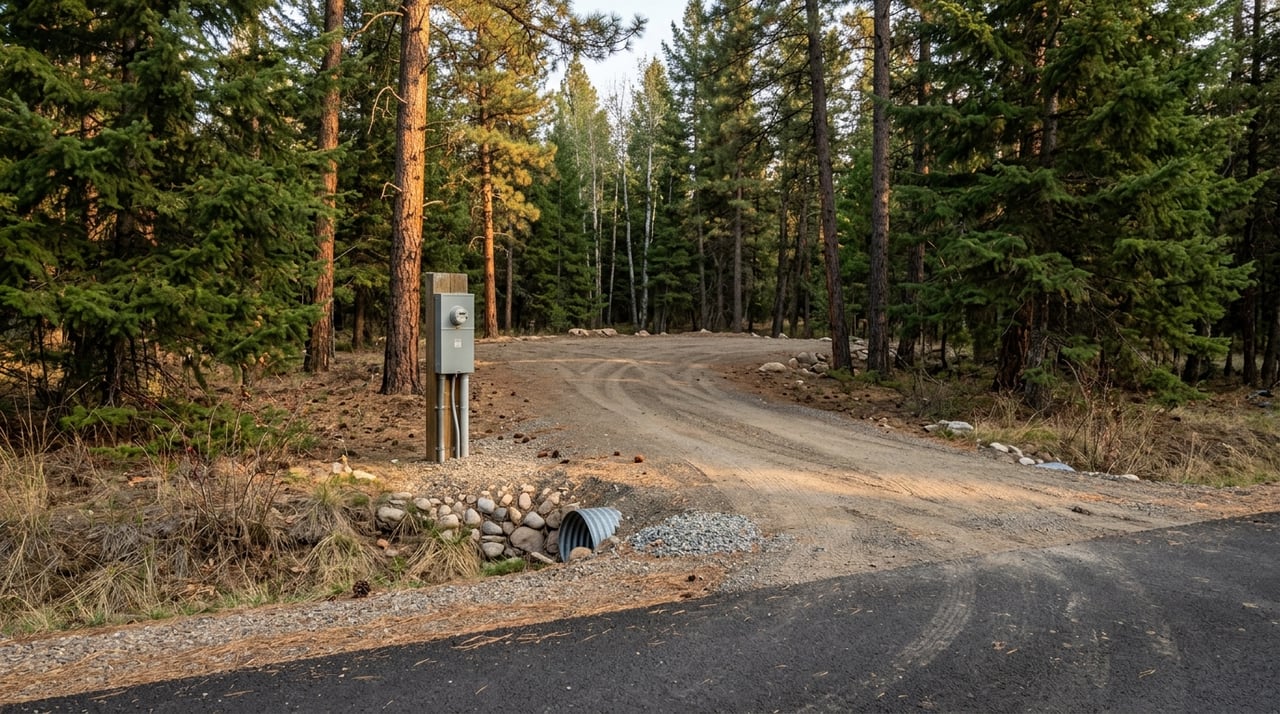
If you are evaluating subdividable land around Plains, access should be near the top of your checklist. Montana review criteria require legal and physical access to each parcel, and Sanders County regulations state that each lot must abut and have access to a public or private street or road.
This is where many promising-looking parcels run into trouble. A driveway, gate, or rural mailing address does not automatically prove legal access, and county guidance notes that a rural address by itself is not confirmation of legal access.
Questions to ask about access
Before you move forward, it helps to verify:
- Whether the parcel has documented legal access
- Whether each future lot can meet access requirements
- Whether an existing road meets county subdivision design standards
- Whether a driveway connection to a primary highway may require approval
- Whether a private road maintenance agreement could be needed
A parcel that looks simple on a map may still face expensive or time-consuming road issues. This is one reason early due diligence matters so much with rural and edge-of-town land.
Water, septic, and utilities matter early
After access, utilities and sanitation are often the next major hurdle. For subdivisions under 20 acres, the Montana Department of Environmental Quality reviews sanitation and issues a Certificate of Subdivision Approval identifying the water source, wastewater disposal, and stormwater mitigation. You can learn more through the Montana DEQ subdivision review program.
Sanders County also requires DEQ approval before final plat for lots under 20 acres. In addition, the county requires utility easements and, in some situations, ditch or irrigation easements where water delivery infrastructure needs to be protected.
In-town utility potential vs. parcel-specific reality
Inside Plains, some parcels may have an easier development path because the town maintains streets, drainage systems, sewer, and water utilities through its Public Works Department. The town also posts water quality reports for recent years, which supports the idea that municipal utility infrastructure is available in town.
Still, public systems nearby do not guarantee service or capacity for a specific parcel. You want direct confirmation before assuming a lot can be served.
Floodplain issues deserve close review
Floodplain and hazard concerns can quickly change the outlook for a tract. Sanders County prohibits subdivision of floodway land for building or residential purposes, requires certified floodplain data for land near designated or large watercourses, and may determine land is unsuitable for subdivision if hazards cannot be mitigated. These standards are detailed in the Sanders County Subdivision Regulations.
This is especially important in an area where waterways and scenic land features are part of what draws buyers in the first place. A parcel may be attractive on paper, but if building areas are limited by floodplain conditions, the subdivision opportunity may be far smaller than expected.
Irrigation and water rights can affect lot design
Another issue that often surprises buyers is irrigation infrastructure. Sanders County may require ditch easements, protect access to existing irrigation conveyance systems, and apply rules tied to water rights when lots are created.
In practical terms, a parcel may not split cleanly just because there is enough acreage. Existing ditches, easements, or water-right dependencies can shape where lot lines go, what disclosures are needed, and whether the final design is workable.
Title history matters more than many buyers expect
Before you market or buy land as a possible split, it is important to review the title and recording history. The Sanders County Clerk and Recorder is the official records center for plats, surveys, and real estate documents, and Montana law requires final subdivision plat approval before title to subdivided land can be transferred.
That makes deed history, plat history, and any recorded exemptions worth checking upfront. If the paperwork trail is incomplete or misunderstood, it can delay a sale or create problems later in the process.
A practical checklist for Plains-area parcels
If you are trying to identify a promising subdividable land opportunity around Plains, this short checklist can help you stay focused on the big issues first.
Due diligence steps to review
- Confirm whether the parcel is inside Plains or in unincorporated Sanders County.
- Review deed history, plat history, and any prior recorded land divisions.
- Verify legal and physical access for the existing parcel and future lots.
- Check whether the land is affected by floodplain or other hazard constraints.
- Ask whether irrigation facilities, ditch easements, or water-right issues affect the site.
- Confirm the likely water and wastewater path, including DEQ review if applicable.
- Determine whether utility service exists, can be extended, or needs easements.
- Clarify whether the proposed split fits a minor subdivision path or a possible exemption.
Each of these steps ties back to county or state review criteria. Skipping one can turn an exciting opportunity into a costly surprise.
What usually makes a parcel more promising
In general, the best subdivision candidates around Plains tend to share a few traits. They usually have clear legal access, workable road conditions, a realistic water and septic path, no fatal floodplain limitations, and a land division structure that fits Montana’s rules.
That does not guarantee approval, but it does improve the odds that the parcel is worth serious consideration. If you are comparing multiple properties, these factors can help you separate a realistic opportunity from land that only looks good at first glance.
Why local guidance can help
Subdividable land can offer real upside, but it also asks you to be more careful than you would with a typical house purchase. Rules vary depending on whether the property is in town or county jurisdiction, and the details behind access, roads, utilities, floodplain conditions, and recorded documents can all shape what is possible.
If you are buying, selling, or evaluating land around Plains, working with someone who understands local property patterns can help you ask better questions early. For practical guidance on Plains and Sanders County land opportunities, connect with Deborah Warren for a local market consult.
FAQs
What makes land around Plains, Montana potentially subdividable?
- Land around Plains may be subdividable if the parcel fits Montana’s subdivision framework and has workable access, utilities or septic options, and no unresolvable floodplain or hazard issues.
What is the first step when evaluating subdividable land near Plains?
- The first step is confirming jurisdiction, meaning whether the parcel is inside Plains town limits or in unincorporated Sanders County, because that affects which governing body reviews the land division.
What is a minor subdivision in Montana?
- Montana defines a minor subdivision as one that creates five or fewer lots from a tract of record, and some first minor subdivisions may qualify for a streamlined review path if access is already in place.
Do family transfers create buildable lots around Plains automatically?
- No. Family transfers and other exempt divisions may still require surveying and must still follow applicable zoning and other land-use rules.
Why is access so important for subdividing land in Sanders County?
- Access is critical because each lot must have legal and physical access to a public or private road, and a rural address or visible driveway does not by itself prove legal access.
Do lots under 20 acres near Plains need sanitation review?
- Yes. Subdivisions under 20 acres generally need Montana DEQ sanitation review, including identification of water source, wastewater disposal, and stormwater mitigation.
Can floodplain issues stop a subdivision near Plains?
- Yes. Sanders County regulations can limit or prevent subdivision where floodway or hazard conditions make land unsuitable for building or cannot be properly mitigated.
Where can you check plats and recorded land documents in Sanders County?
- You can check plats, surveys, and recorded real estate documents through the Sanders County Clerk and Recorder.